
Learning how to evaluate a site for luxury development is one of the most important skills in ground-up building. The lot determines what can be built, how long it will take, and who the finished home will ultimately appeal to.
A beautiful piece of land is not automatically a good development site. Many of the most important factors are invisible at first glance: zoning language, soil conditions, utility capacity, and recorded restrictions.
This article walks through the questions development teams commonly ask before committing to a site. It is meant to explain the thinking, not to serve as a checklist for any specific property.
Start With What the Site Allows
The first question is not “What would we like to build?” It is “What does this site allow?” Zoning rules typically govern setbacks, height limits, lot coverage, and permitted uses. Some neighborhoods add overlay districts or historic guidelines.
Private restrictions matter too. Deed restrictions, covenants, and homeowner association rules can control architectural style, home size, materials, and even construction hours. Reviewing these early prevents designing a home that cannot be approved.
Study the Shape and Topography of the Land
Lot dimensions and slope have a direct effect on design and cost. A wide, gently sloping lot may allow a generous footprint and simple foundation. A narrow or steep lot may require retaining walls, specialized foundations, or creative architecture.
Slope is not always a negative. A well-handled grade can create walk-out lower levels, views, and privacy that buyers value. The key is understanding the engineering and site work involved before committing.
Look Below the Surface
Soil conditions, rock, drainage, and flood exposure can change a project significantly. Development teams often order geotechnical reports and surveys during due diligence to understand what lies underground.
Drainage deserves special attention. Water that flows onto or across a lot must be managed, and local rules may require stormwater solutions. Mature trees, wetlands, and protected areas can also limit where a home can sit.
Confirm Utilities and Access
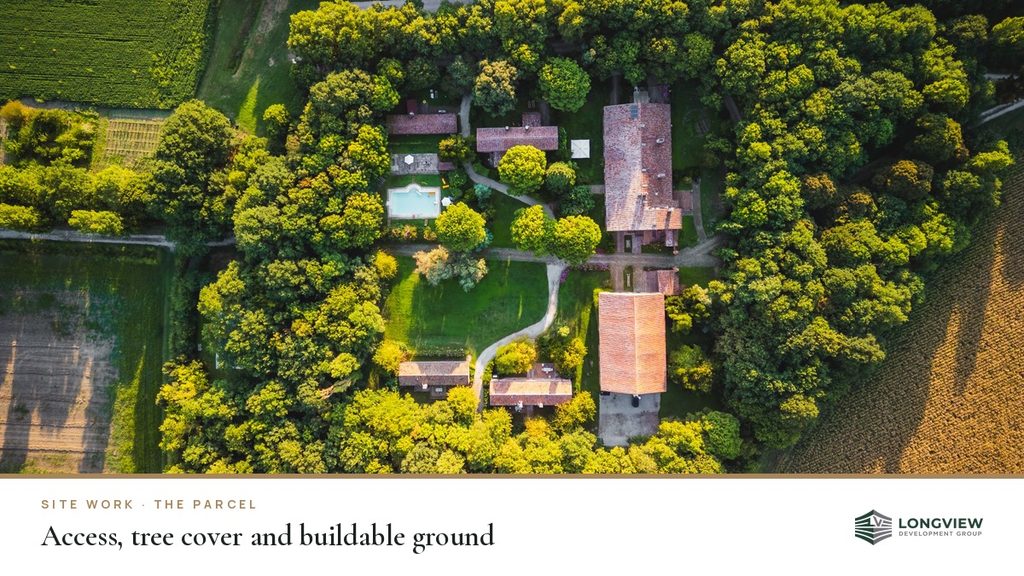
A site needs reliable access to water, sewer or septic, electricity, gas, and telecommunications. Some lots appear ready but require costly extensions, upgrades, or easements to connect.
Access matters as well. Driveway placement, street frontage, sight lines, and shared drives can all affect both design and approvals. Construction access, meaning how trucks and equipment will reach the site, is another practical consideration.
Understand the Neighborhood and Buyer
Luxury homes are built for a particular buyer, and that buyer chooses a neighborhood as much as a house. Development teams study surrounding homes, recent comparable sales, school zones, commute patterns, and the overall character of the street.
A home should fit its context. Building far beyond what a neighborhood typically supports, or well below it, can make a finished home harder to sell. The goal is alignment between the site, the design, and the expectations of likely buyers.
Review Title, Easements, and Surveys
Title work reveals who owns the land and what rights others may hold over it. Easements for utilities, drainage, or access can limit where structures may be placed.
A current boundary and topographic survey confirms the true shape of the lot and identifies encroachments or discrepancies. These documents are not glamorous, but they frequently decide whether a site moves forward.
Factor in the Approval Path
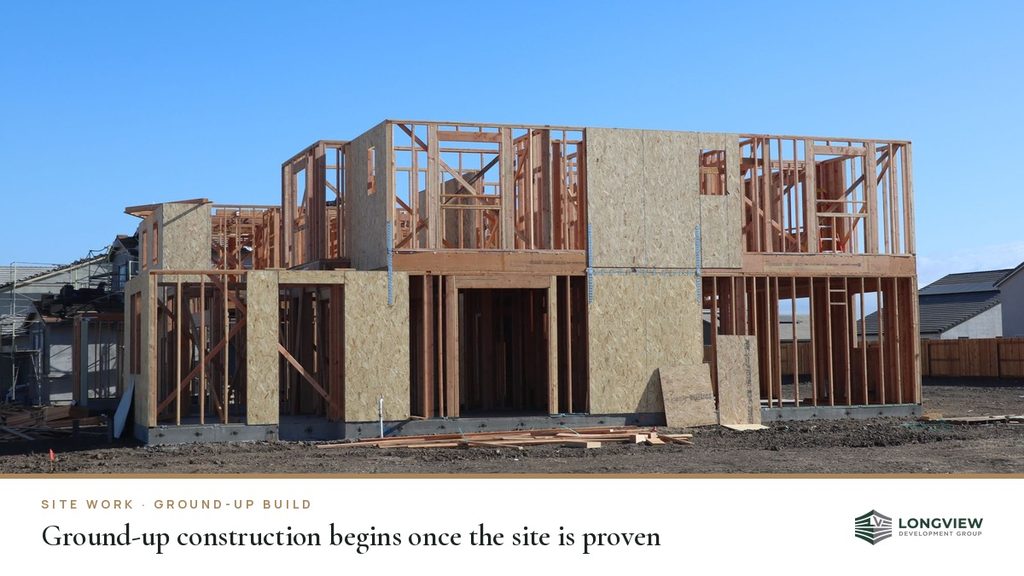
Some sites move through permitting smoothly. Others require variances, design review, or neighborhood input. Each additional step adds time and uncertainty.
Experienced teams talk with planning staff early, review recent approvals nearby, and estimate a realistic timeline. A site with a clear approval path can be more attractive than a larger or prettier site with an uncertain one.
Weigh Everything Together
No site is perfect. Evaluation is about weighing strengths against challenges and deciding whether the challenges can be solved within a reasonable schedule and scope.
This is also where discipline matters. After weeks of research, it can feel difficult to walk away. However, new information discovered during due diligence deserves to be taken seriously. Passing on the wrong site is a normal part of responsible development.
Why Site Evaluation Matters to Partners
For our partners, understanding how a site is evaluated provides context for every later decision. When a project moves forward, it is helpful to know which factors were studied and which risks were identified up front.
Good questions for any development team include: What did due diligence reveal? What surprised you? What would have caused you to pass on this site?
The goal is not to become a land expert. It is to understand why the ground beneath a luxury home matters as much as the home itself.
This article is for general educational purposes only and is not investment, tax, or legal advice. Every site and project is different, and all development involves risk. Please consult your own qualified advisors before making any financial decision.
Free guide: The Private Investor’s Guide to Luxury Home Development is free to download. Request your copy with the short form at the end of this post.