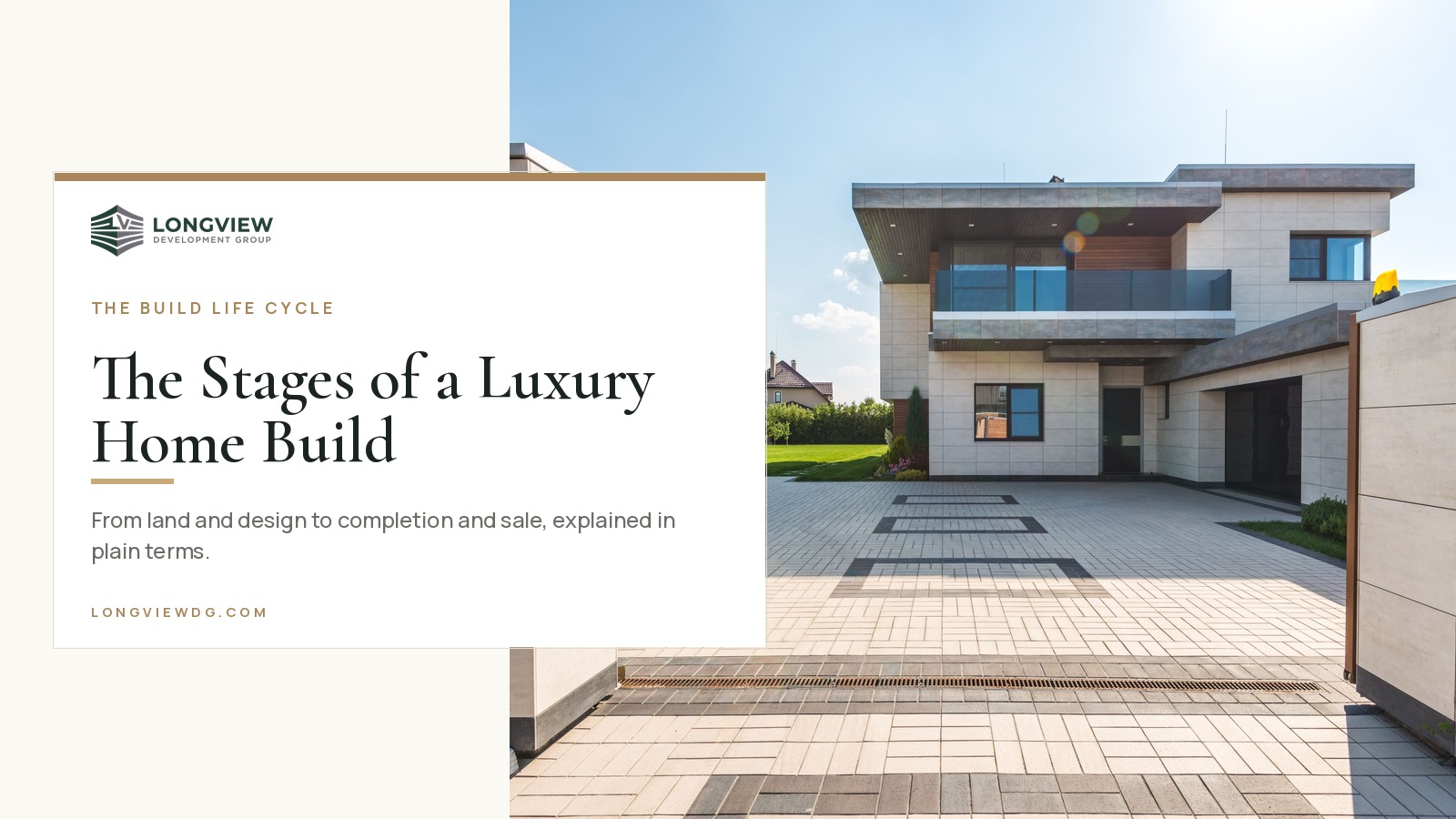
The luxury home build life cycle is longer and more layered than most people expect. A finished custom home may look effortless from the street, but behind it sits a sequence of decisions, approvals, and coordinated work that often spans well over a year.
For anyone curious about how ground-up luxury development actually works, understanding these stages is the best place to start. Each phase has its own purpose, its own risks, and its own set of people responsible for getting it right.
The goal of this article is not to make the process sound simple. It is to make it understandable.
Stage One: Site Selection and Acquisition
Every luxury home begins with land. Before anything is designed, a development team studies whether a particular lot can support the kind of home the market expects. That includes zoning, lot dimensions, topography, utilities, access, and the character of the surrounding neighborhood.
Acquisition is rarely just a purchase. It usually involves a due diligence period, surveys, title review, and conversations with local planning officials. A lot that looks perfect on paper can reveal drainage issues, easements, or restrictions that change what can be built.
Walking away from the wrong lot is a normal and healthy part of this stage.
Stage Two: Design and Architecture
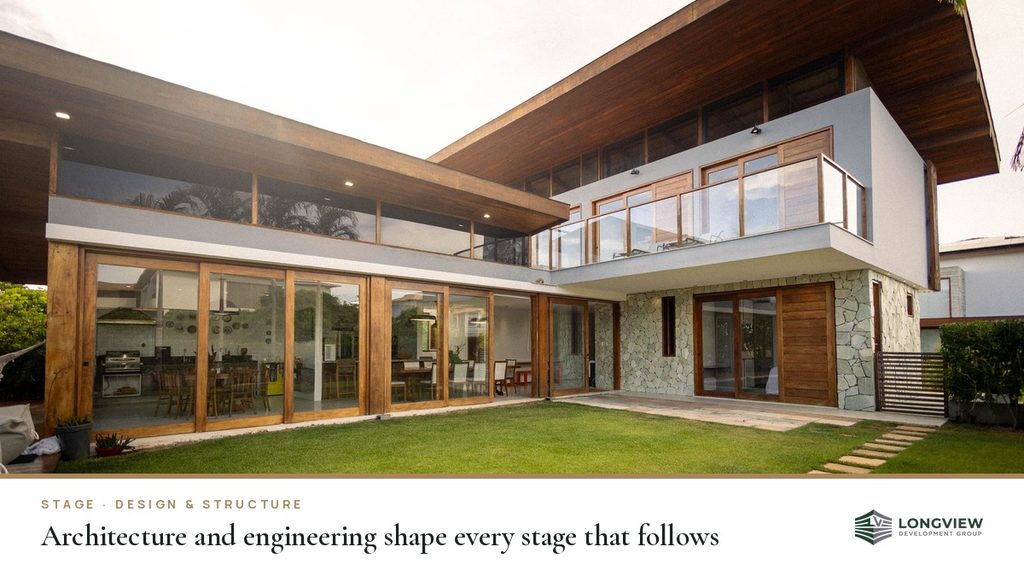
Once a site is secured, the design phase translates the land and the market into a specific home. Architects, designers, and the development team work together on floor plans, elevations, finishes, and how the home sits on the lot.
Good luxury design balances aspiration with practicality. The home should feel distinctive, but it also needs to be buildable within a realistic schedule and budget. Decisions made here, such as structural systems, ceiling heights, and window packages, ripple through every later stage.
This is also when engineers typically join the process to address structure, grading, and drainage.
Stage Three: Permitting and Approvals
Permitting is often the least visible and most underestimated part of the luxury home build life cycle. Plans must be reviewed by the local authority, and some neighborhoods also have design review boards or homeowner association requirements.
Timelines can vary widely. Revisions may be requested, and certain approvals must happen in sequence. Experienced teams plan for this stage rather than treating it as a formality, because delays here push back everything that follows.
Stage Four: Financing the Build
Ground-up construction is commonly financed through some combination of partner capital and construction debt. Construction loans are typically drawn in stages as work is completed and inspected, rather than funded all at once.
Some projects use a traditional bank, while others work with a direct lender that specializes in construction. Each option has different terms, timelines, and reporting requirements. Understanding how funds move through a project helps explain why budgeting and documentation matter so much during the build.
Stage Five: Site Work and Foundation
With approvals and financing in place, physical work begins. Site work can include clearing, grading, excavation, utility connections, and erosion control. On sloped or complex lots, this phase alone can take considerable time.
The foundation follows. Whether it is a slab, crawl space, or full basement, the foundation sets the footprint for everything above it. Precision matters here, because mistakes are difficult and costly to correct later.
Stage Six: Framing, Systems, and Enclosure
Framing gives the home its shape. Walls, floors, and roof structure go up, and the design begins to feel real. Once the structure is in place, mechanical, electrical, and plumbing systems are installed, followed by inspections.
The home is then enclosed with roofing, windows, doors, and exterior finishes. Getting the home “dried in” protects the interior from weather and allows finish work to begin.
Stage Seven: Interior Finishes
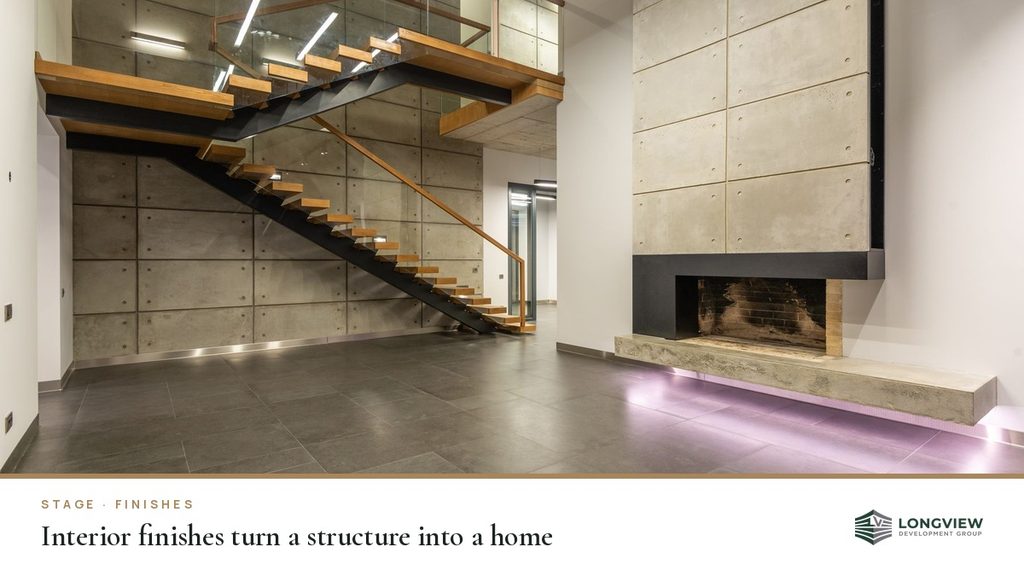
In luxury construction, interior finishes are where much of the value and character live. Cabinetry, millwork, stone, tile, flooring, lighting, plumbing fixtures, and appliances all come together during this stage.
It is also where coordination becomes most demanding. Many specialty trades work in close sequence, and lead times on custom or imported materials can affect the schedule. Quality control during finishes protects the final product.
Stage Eight: Completion, Marketing, and Sale
As construction wraps up, the home goes through final inspections and a certificate of occupancy is issued. Landscaping, hardscaping, and final cleaning prepare it for presentation.
Marketing often begins before completion, using renderings and progress updates. Once the home sells and closes, the project’s books are reconciled and partners receive final reporting. That closing marks the end of one life cycle and, often, lessons that shape the next.
Why the Full Life Cycle Matters
It is easy to focus on the finished home. However, the outcome of any luxury project is shaped by every stage that came before it. Site decisions affect design. Design affects permitting. Permitting affects schedule, and schedule affects cost.
For our partners, understanding the luxury home build life cycle is less about memorizing steps and more about knowing which questions to ask at each point. An informed partner can follow progress with clarity and recognize what is normal along the way.
The goal is not to know how to build a home yourself. It is to understand how a well-run project moves from site acquisition to a finished residence.
This article is for general educational purposes only and is not investment, tax, or legal advice. Every project is different, and all development involves risk. Please consult your own qualified advisors before making any financial decision.
Free guide: The Private Investor’s Guide to Luxury Home Development is free to download. Request your copy with the short form at the end of this post.